
Gresham City Council Replaces 2021 DEI Statement with "FARA"
A Democratic activist expressed concerns over lack of language addressing effects of past discrimination in new FARA resolution.
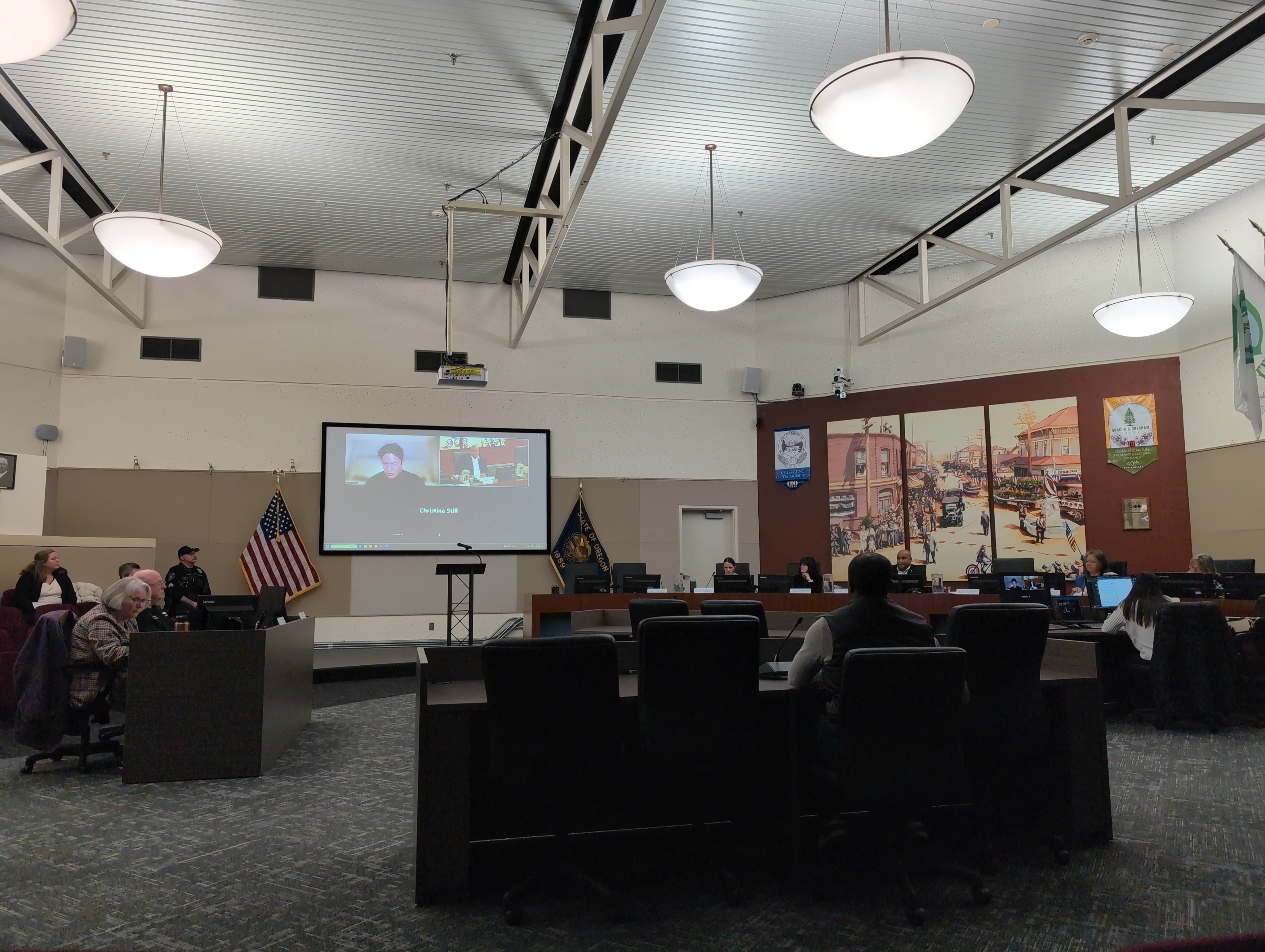
On Tuesday February 17, 2026, the Gresham City Council voted 5 to 1 in favor of repealing the city’s 2021 Diversity Equity and Inclusion resolution and replacing it with a resolution entitled “Fairness, Access, Respect and Accountability” (FARA). Councilor Eddy Morales was the sole member who voted against replacing the city’s DEI statement with FARA. The FARA resolution was previously put onto the agenda for the Dec. 9, 2025 city council meeting, where community members were calling for the city council to pass an emergency resolution addressing local ICE activity, but was postponed.
Eddy Morales was the sole city councilor present to vote against replacing the DEI resolution with the new FARA resolution.
Several of the councilors argued against the view presented by Andre Miller, Vice Chair of the Multnomah County Democrats, who described the city repealing the DEI resolution as following a nationwide “coordinated backlash” against DEI language.
Gresham Mayor Travis Stovall said that the resolution had “nothing to do with changing language to fit some national narrative.” Councilor Kayla Brown said that the city was “not trying to adopt something on a national standard but what works best for Gresham.”
From his perspective, Miller told me, the Gresham City Council’s vote to repeal the DEI resolution was happening because of executive orders created by the Trump administration to get rid of DEI under threat of taking away federal funding from local municipalities.
A number of executive orders created under the Trump Administration have argued that DEI language violates the Civil Rights Act, and have worked to remove language describing the disparate-impact theory of discrimination which argues that even neutral policies can be discriminatory if they have a discriminatory effect.
Miller asked the councilors to approve a disparity study, to audit hiring, promotions, contracts and procurement to ensure compliance within Title VII of The Civil Rights Act.
Except for a comment by Councilor Sue Piazza, who implied that staff might be wanting to use FARA to replace the prior DEI language based on unspecified federal guidelines at a Nov. 4, 2025 work session, there doesn’t seem to be any direct evidence that this resolution was passed or written with the purpose of complying with any specific executive order.
At a Nov. 4, 2025 work session, when City Manager Eric Schmidt presented the proposed FARA resolution to council members, he described the effort as simplifying the city’s previous DEI statement to avoid people potentially being put off by the term “DEI” or misunderstanding what it was about. Schmidt also said that the resolution was not created as a result of any recent election.
The council members who approved the passage of FARA said they viewed it as a continuation of the work the City had been doing under the previous DEI resolution and that even if it was called something else the work would continue. Council President Cathy Keathley said that, “The city is absolutely committed to all the efforts that we’ve had and that we continue to do, the name of the program is not as important as what the program does.” Likewise, Councilor Brown said that their goal was “not to conceal the work of DEI” but, “to anchor it and center it in the work that is being done.”
Councilor Morales and Miller did not view FARA replacing the city’s DEI resolution in the same light. For Miller, the problem with FARA isn’t what’s in the new resolution - it’s what’s not. FARA, Miller told me, “doesn’t have anything as far as language in the actual resolution to show that they are going to be building off of the policies and efforts that were already taking place.”
Notably, the language in FARA does not mention any specific groups that have experienced discrimination and instead uses broad language that seems intended to have a similar effect. Miller told me that without specifically mentioning disability, sex and race, the City of Gresham wouldn’t have the tools in place to address various forms of discrimination from the gender pay gap, to redlining, to Oregon’s history of Black exclusion laws.
Neither Morales or Miller were strictly opposed to FARA itself but were instead opposed to it replacing the previous DEI resolution. At the Dec. 9 meeting, Miller said that FARA “should be intended to clarify goals, improve communication and reduce politicized noise around the DEI acronym, not be used to replace it. Morales said likewise before he voted against FARA, “I’m for FARA and for DEI, and not for replacing one for the other.”
The best explanation I have for where the source of the disagreement between Morales and the rest of the city council stems from is that the language in FARA and in the previous DEI statement are written from two entirely different ideological perspectives.
Here are the two lines that I think most closely shows this difference:
In the original DEI resolution it says,
“Whereas, equity is more concerned with fairness than equality, it recognizes that all individuals do not start at the same place ...”
While in the FARA resolution it reads,
“Whereas, Fairness means ensuring that all individuals are treated justly, without bias or favoritism ...”
The underlying tension between these two lines is that people disagree about what fairness actually means. It’s also the difference between modern liberalism and classical liberalism. For modern liberalism, society starting unequal means that some people need more help than others to participate in the economy. For classical liberals as long as people are free from interpersonal discrimination and wouldn’t be denied opportunities solely based on who they are, then that’s the best that can be done while still being fair to others.
The concerns that Morales and Miller both expressed about approving FARA without the prior DEI resolution in effect highlights how they view the impact of historical discrimination on the present. As Councilor Morales said, “unless we are willing to acknowledge that there is disparities and really put policies and solutions to addressing them we won’t see that happen.”
Note: I was previously a canvasser for a political group co-founded by Councilor Eddy Morales.